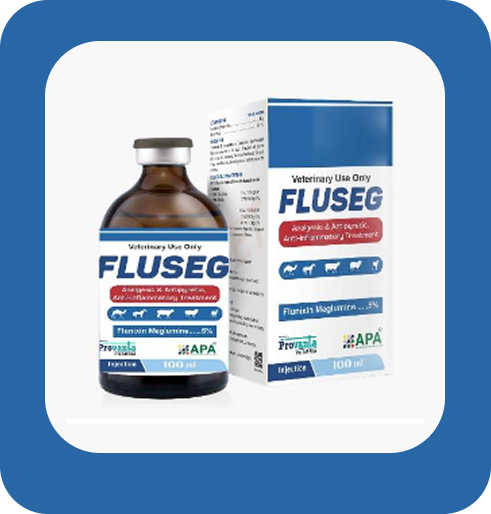
Flunixin meglumine injection is a potent, non-narcotic, non-steroidal anti-inflammatory drug (NSAID) used in veterinary medicine for its analgesic (pain-relieving), anti-inflammatory, and antipyretic (fever-reducing) properties.
100ml Contains:
Flunixin Meglumine — 5%
In Cattle:
In Horses:
Cattle, Buffalo and Horses:
The recommended dose rate is 1 ml per 45 kg bodyweight.
Repeat as necessary at 24-hour intervals for up to 5 consecutive days.
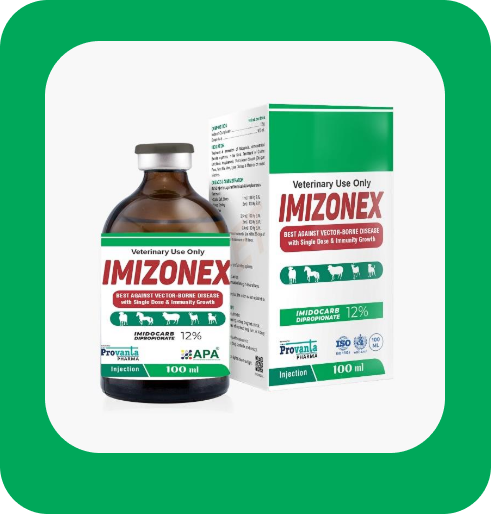
Imidocarb injection is an antiprotozoal medication used in veterinary medicine for the treatment and prevention of several tick-borne diseases in various animal species.
100ml Contains:
Imidocarb Dipropionate — 12%
Cattle & Sheep:
Horses, Donkeys & Mules:
Treatment of Anaplasmosis & Mixed Infections (Anaplasma + Babesia) – Cattle:
Prophylaxis of Babesiosis:
Cattle:
Equines:
IMIZONEX can be given by subcutaneous (S/C) or intramuscular (I/M) injection. The I/M route is preferred for horses.
Butafosfan and Vitamin B12 is a well-established veterinary combination used as a metabolic stimulant, tonic, and supportive therapy in a wide range of domestic animals. It plays a significant role in improving energy metabolism, enhancing recovery during stress, and supporting overall physiological performance in horses, cattle, sheep, goats, pigs, dogs, cats, and poultry.
Each 100ml Contains:
Butafosfan — 10%
Vitamin B12 — 0.005%
This combination is indicated for metabolic and nutritional disorders stemming from poor feeding, stress, disease, or inadequate management. It supports animals during secondary ketosis in cows and developmental issues in young stock. It is also widely used to enhance reproductive efficiency, helping prevent infertility and post-partum complications while acting as an excellent adjunct in sterility management. As a tonic and restorative agent, it boosts overall vitality during periods of exhaustion, overexertion, stress, and reduced immunity. Additionally, it assists in the management of weakness and secondary anemia by supporting red blood cell formation through Vitamin B12. It further contributes to muscular health and is sometimes used to improve performance in working, dairy, or racing animals.
Horses & Cattle:
Calves:
Pets (Dogs & Cats):
Poultry:
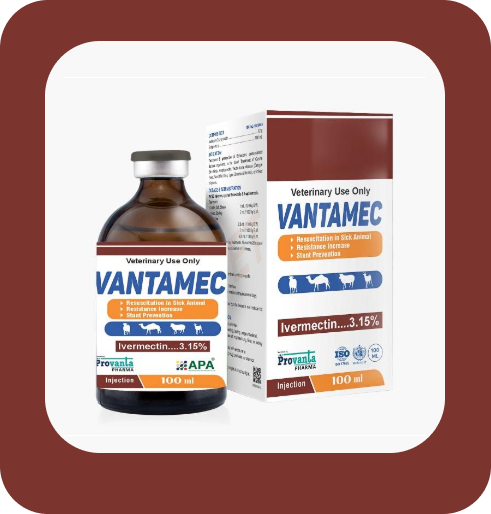
Ivermectin belongs to the group of avermectins and is widely used as a highly effective antiparasitic agent. It provides strong activity against a broad spectrum of internal and external parasites, helping maintain animal health and productivity. This formulation is particularly effective for the treatment and long-term control of roundworms, ticks, warbles, and other parasitic infestations in cattle.
Each 1 ml contains Ivermectin — 3.15%
This preparation is indicated for the treatment and control of a wide range of internal and external parasites in cattle. It is effective against roundworms, leeches, warbles, and ticks, providing extended protection that helps reduce reinfestation and maintain improved health and growth performance in treated animals.
Cattle: 1 ml per 50 kg body weight.
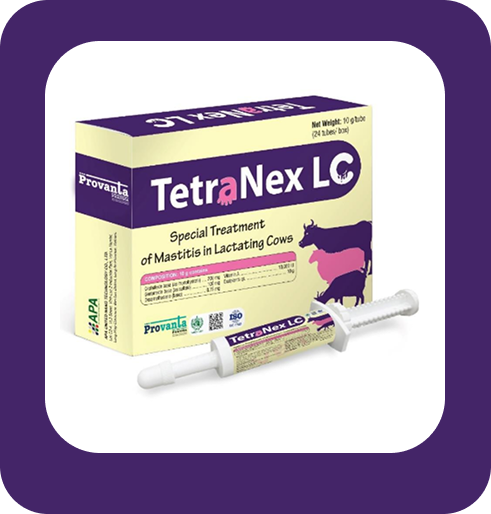
TETRANEX LC is used for the special treatment of mastitis in lactation cows.
Treatment of clinical and subclinical mastitis in cattle, sheep, and goats in milk production, caused by microorganisms sensitive to Cephalexin and Gentamicin such as Staphylococcus spp., Streptococcus spp., and Escherichia coli.
One syringe for each affected quarter every 12–24 hours for 2 days or until complete recovery.
10g/tube
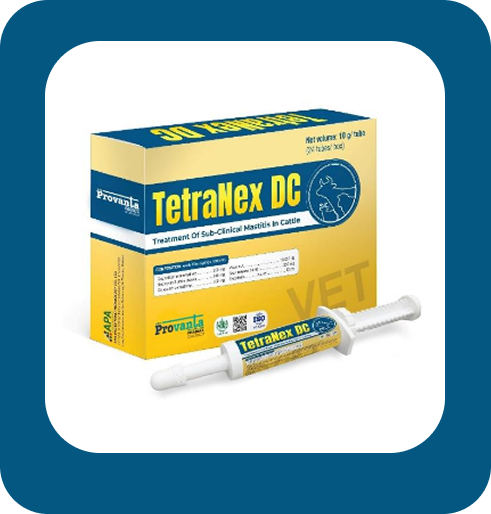
TETRANEX DC is used for the treatment of subclinical mastitis in cattle.
Treatment of subclinical infection and prevention of mastitis in cattle at the beginning of dry periods, caused by germs sensitive to any of the antibiotics in the formula.
The udder must be completely milked and disinfected before infusion. Remove the cap of the syringe and apply through the intramammary tube. For cattle: 1 syringe per quarter immediately after the last milking before drying-off.
10g/tube
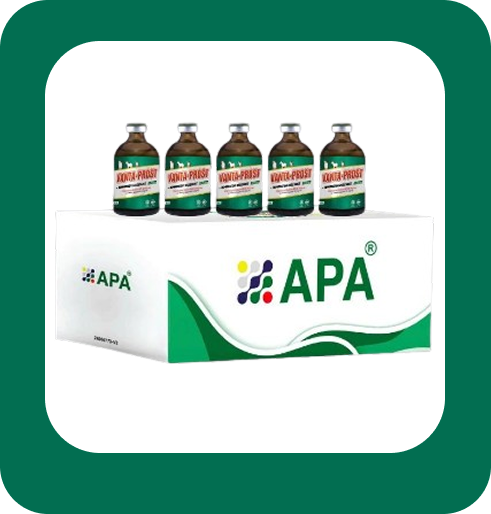
VANTA-PROST is used for reproductive assistance in dairy lactating cattle.
Used in dairy lactating cattle to induce luteolysis, manipulate the estrus cycle for breeding management, terminate pregnancy, and treat conditions associated with prolonged luteal function.
Cattle: 2 ml per animal.
Horses: 1–2 ml per herd.
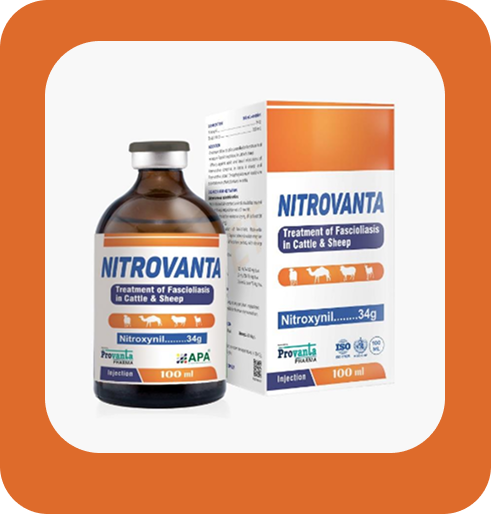
Nitrovanta Injection is a veterinary anthelmintic formulated for cattle and sheep, primarily indicated for the treatment of fascioliasis caused by liver flukes. It also provides effective control against a range of gastrointestinal roundworms. This preparation contains Nitroxinil, a potent antiparasitic compound.
Each 100 ml contains Nitroxinil — 34%
Nitroxynil is used to treat parasitic infections including mature and immature liver flukes (Fasciola hepatica and Fasciola gigantica). It is also active against several blood-sucking gastrointestinal roundworms such as Haemonchus contortus, Haemonchus placei, Oesophagostomum radiatum, and Bunostomum phlebotomum in both cattle and sheep. Additionally, it is effective for treating Oestrus ovis (nasal bot larvae) in sheep and camels, and has further use against hookworms in dogs.
Cattle and Buffalo: 1 ml per 50 kg body weight.
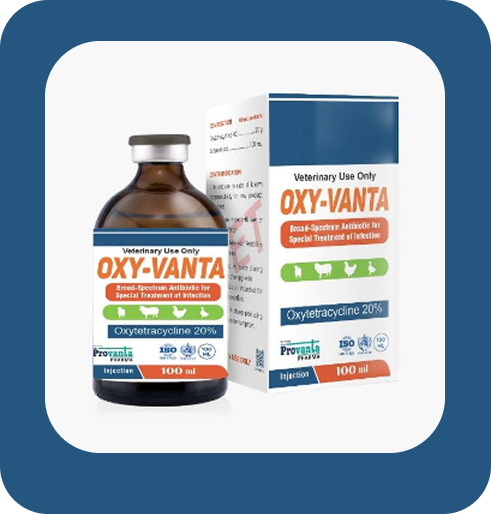
Oxytetracycline is an antimicrobial medication used to treat bacterial infections in cats, dogs, cattle, sheep, and horses.
Each 100ml Contains:
Oxytetracycline — 200 mg
Cattle:
Oxytetracycline is commonly used for treating bovine respiratory disease (BRD, shipping fever), infectious bovine keratoconjunctivitis (pink eye), foot rot, diphtheria, bacterial enteritis (scours), wooden tongue, leptospirosis, acute metritis, and wound infections.
Sheep & Goats:
It is used to treat bacterial conditions such as pneumonia, foot rot, and enteritis, as well as managing leptospirosis and enzootic abortion.
Horses:
oxytetracycline may be used for respiratory and soft tissue infections, Potomac fever, and equine piroplasmosis. A high-dose, extra-label use in newborn foals is for correcting angular limb deformities by decreasing tendon viscoelastic properties.
Dogs & Cats:
Oxytetracycline (or more commonly, doxycycline) is used to treat various bacterial infections, including respiratory, sinus, wound, and oral infections. It is also a potential treatment for tick-borne infections such as Ehrlichiosis, Rocky Mountain spotted fever, and feline infectious anemia.
Poultry & Fish:
In poultry, it is used for fowl cholera, fowl typhoid, and chronic respiratory disease (CRD), while in aquaculture it is effective against bacterial fish infections like vibriosis and flavobacteriosis.
Cattle & Buffalo:
Poultry: